
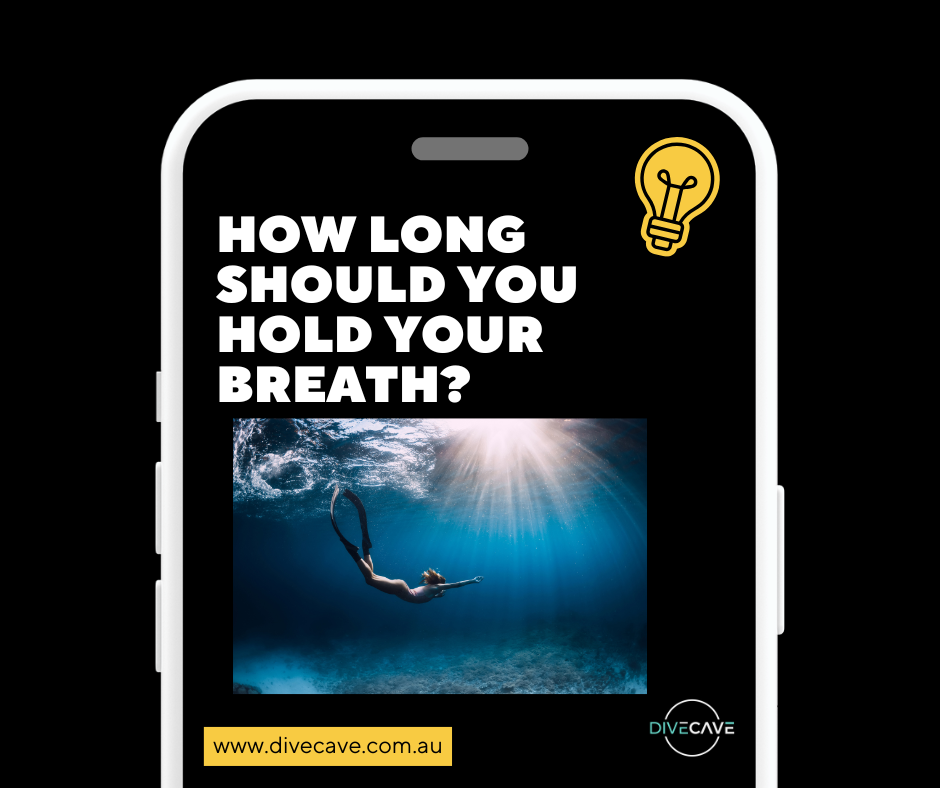
How long should you hold your breath? (And why it varies so much)
One of the most common questions we hear in-store at Dive Cave is: “How long should I be able to hold my breath?”
It’s a fair question, and the answer often surprises people.
The short version? There is no single ‘normal’ breath-hold time, and longer is not always better.
The Average Breath Hold (Untrained)
For most people who have never practised breath-holding, an average static breath hold (lying still, relaxed) is around:
30–90 seconds
And that’s completely normal.
Movies, social media, and YouTube can make it look like everyone should be holding their breath for 3–5 minutes, but those times are usually achieved through:
-
Proper technique
-
Relaxation training
-
CO₂ tolerance work
-
Safety supervision
Not willpower alone.
Why Breath-Hold Time Varies So Much
Two people of the same age and fitness level can have vastly different breath-hold times. Some of the biggest factors include:
Relaxation
Tension is the enemy of breath-holding. A calm, relaxed diver will almost always outlast a stressed one.
Mental State
Anxiety, rushing, or focusing too hard on “beating a time” can dramatically shorten a breath hold.
Environment
Holding your breath on the couch is very different from doing it in the ocean with movement, current, or cold.
Physiology
Lung volume, spleen response, and natural CO₂ tolerance vary from person to person.
🏊 Experience & Training
Freedivers train their bodies to become comfortable with rising carbon dioxide levels - not lack of oxygen, which is a common misconception.
Static vs Dynamic vs Depth
Breath-hold times also depend on how you’re holding your breath:
-
Static apnea (lying still): longest times
-
Dynamic apnea (swimming): shorter times due to movement
-
Depth diving: breath hold is affected by pressure, technique, and efficiency
This is why comparing yourself to others — or to online videos — isn’t helpful or safe.
Is Holding Your Breath Longer Always Better?
Short answer: No.
In freediving and spearfishing, efficiency, relaxation, and awareness matter far more than chasing long times.
Many experienced spearfishers don’t have extreme static breath-hold times - they’re simply calm, efficient, and make smart decisions underwater.
A Critical Safety Reminder
Breath-hold training should never be done:
-
Alone
-
In water without supervision
-
While driving or floating face-down
Shallow water blackout is silent and unpredictable, even for experienced divers.
If you’re interested in improving your breath-hold safely, the best place to start is a proper freediving course, where techniques are taught progressively and with safety systems in place. We recommend learning through experienced instructors such as Ocean Sense Freediving, who focus on safe technique, relaxation, and in-water supervision. Using well-fitted, purpose-built equipment also plays a big role in comfort and safety.
The Takeaway
If you’re holding your breath for:
-
30–60 seconds → you’re completely normal
-
1–2 minutes → you’re doing well
-
Longer than that → you’re likely training properly
Progress in freediving isn’t about forcing longer breath holds - it’s about learning to relax, move efficiently, and dive safely.
If you have questions about freediving, breath-hold training, or getting started with the right gear, pop into Dive Cave and have a chat with the team. We’re always happy to help.
— The Dive Cave Team