
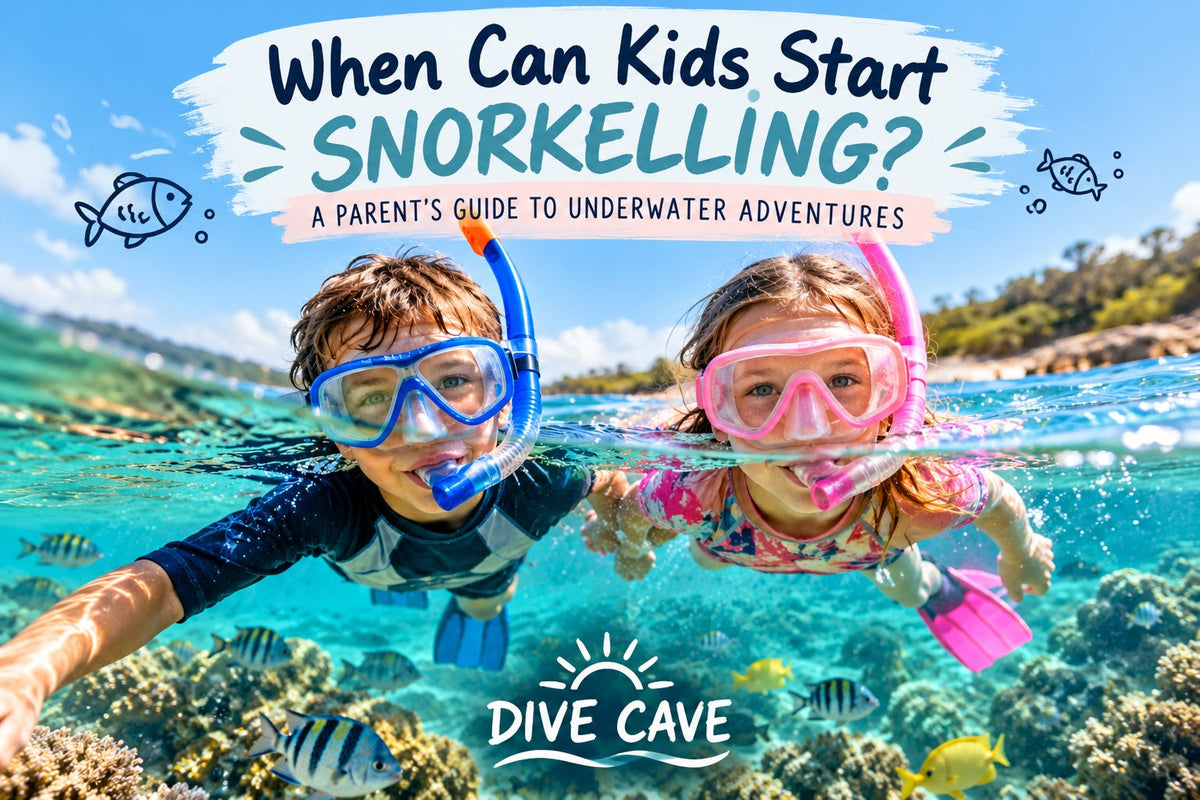
When Can Kids Start Snorkelling? A Parent’s Guide to Underwater Adventures
There’s something magical about seeing the ocean through a child’s eyes for the first time. From spotting colourful fish in the shallows to discovering what’s hiding beneath the surface, snorkelling can open up a whole new world for little adventurers.
But when is a child old enough to start snorkelling? What gear do they need? And how can you help them feel confident and safe in the water?
At Dive Cave, we love helping families get ready for their next ocean adventure. Here’s what parents should know before introducing their little ones to snorkelling.
What age can kids start snorkelling?
There isn’t one perfect age for every child. Some children may enjoy trying a mask and snorkel in shallow water from around 4 or 5 years old, while others may not feel ready until they’re older.
Rather than focusing only on age, consider your child’s swimming ability, comfort in the water, confidence following instructions and willingness to try something new.
A child who loves splashing around in the pool might be excited to try snorkelling, while another child of the same age may prefer to watch from the shore for a little longer. Both are perfectly fine!
The most important thing is to let children progress at their own pace, without pressure.
What are the benefits of snorkelling for kids?
Snorkelling is more than just a fun activity on a family holiday. It can be a wonderful way for children to learn, build confidence and connect with the natural world.
1. Encourages a love of the ocean
Seeing fish, coral and other marine life up close can spark a child’s curiosity about the ocean. These early experiences can help create a lasting appreciation for the underwater world and the importance of protecting it.
2. Builds confidence in the water
Getting comfortable with a snorkel and mask can help children become more familiar with being in the water. With patient guidance and appropriate supervision, they can gradually build confidence at their own pace.
Snorkelling is not a substitute for swimming lessons, though. Children still need age-appropriate swimming skills and close adult supervision.
3. Makes learning fun
The ocean is like a living classroom! Children can discover different fish, notice patterns and colours, and learn about marine habitats while enjoying time outdoors.
You could even turn your next beach trip into a little ocean scavenger hunt. How many different fish can they spot? Can they find a shell or see a sea star in its natural habitat without touching it?
4. Encourages outdoor family time
Snorkelling gives families a fun activity to enjoy together, whether you’re on a tropical holiday, exploring a sheltered beach or spending a summer weekend on the Sunshine Coast.
It’s a chance to put the screens away, enjoy the fresh air and make memories together.
5. Develops patience and curiosity
Underwater discoveries don’t always happen straight away. Children learn to slow down, observe their surroundings and look carefully for marine life. Sometimes the smallest discoveries are the most exciting!
How to introduce your child to snorkelling
The first experience should be relaxed, playful and pressure-free. Here are a few ways to help your child get started.
Start with the mask. Let your child practise wearing their mask at home or while sitting beside the pool. Make sure it fits comfortably and creates a good seal without needing to be overtightened.
Practise in calm, shallow water. A calm, supervised swimming pool or suitable sheltered swimming area can be a good place to become familiar with the equipment before trying the ocean.
Take it one step at a time. Start by getting comfortable with the mask, then practise breathing through a snorkel while stationary and with an adult close by. Don’t rush to put the whole set together if your child isn’t ready.
Keep the first session short. A few minutes of happy practice is better than a long session that leaves your child tired or overwhelmed.
Make it fun! Point out fish, talk about what you might see and celebrate small achievements. If your child wants to stop, take a break.
What snorkelling gear do kids need?
Having comfortable, well-fitting equipment can make a big difference to a child’s first snorkelling experience.
Here are the basics to consider:
-
A kids’ snorkelling mask: Choose a mask designed to fit your child’s face. A poor fit can allow water to leak in and make the experience frustrating.
-
A snorkel: Select a child-appropriate snorkel that your child can comfortably use and understand. No snorkel design removes the risk of water entering the airway.
-
Fins: Fins can help children move through the water more efficiently, but they need to fit properly and be practised with under supervision.
-
Suitable sun protection: A rash shirt, sun-safe clothing and appropriate sunscreen help protect young skin during time outdoors. Check out Oceanic Reef Suits that offer full-body coverage for swimming.
Avoid simply buying adult equipment and hoping it will fit. Children’s gear should be selected for their size, comfort and ability.
Snorkelling safety: what parents need to know
Safety always comes first, especially with children in and around water.
-
Always keep your child within close, active adult supervision. Do not rely on a snorkel, flotation device or another child to keep them safe.
-
Choose calm, sheltered conditions and an appropriate location. Be aware of currents, waves, boat traffic, visibility and local warnings.
-
Make sure your child can swim at a level suitable for the conditions and understands basic water-safety instructions.
-
Practise using the equipment before heading into the ocean.
-
Keep sessions short and watch for signs of tiredness, cold, distress or discomfort.
-
Never force a child to snorkel or put their face underwater if they are uncomfortable.
-
Avoid breath-holding contests, underwater swimming challenges and diving below the surface without appropriate training and supervision.
Young children can get tired or overwhelmed quickly, and conditions can change unexpectedly. Choose the environment carefully and stay close enough to respond immediately.
Where can kids try snorkelling on the Sunshine Coast?
The Sunshine Coast offers plenty of opportunities for families to enjoy the water, but the best location depends on your child’s ability, the weather and the conditions on the day.
Look for a suitable sheltered area with calm water, good visibility and minimal current. Check local beach and marine-safety advice before entering the water, and ask a qualified local swimming or snorkelling professional if you’re unsure whether a location is appropriate.
Remember, a beautiful beach isn’t automatically a safe snorkelling spot.
Get your little adventurer ready with Dive Cave
Whether your child is trying a mask for the first time or getting ready for a family holiday, having the right equipment can help make the experience more comfortable and enjoyable.
At Dive Cave on the Sunshine Coast, we stock kids’ snorkelling gear to help little ocean lovers prepare for their next adventure, including snorkel sets, masks and fins.
Pop in and explore our range, or shop online before your next beach day.
Because some of the best childhood memories begin with a little curiosity, a splash of sunshine and a glimpse of what’s beneath the waves.
Ready for their first underwater adventure? Explore kids’ snorkelling gear at Dive Cave.
Dive Cave reminder: Snorkelling involves risks, particularly for children. Equipment does not replace swimming ability, appropriate training, close adult supervision or checking local water conditions.